
Your Railcard Saves Money. But There's a Minimum Fare Trap That Catches Everyone.
Your 1/3 off Railcard doesn't always apply. There's a minimum fare rule most Railcard holders have never heard of — and a time restriction on weekday mornings. Here is what it means for your Delay Repay calculation.
Rail Repay Podcast
Your Railcard Saves Money. But There's a Minimum Fare Trap That Catches Everyone.
Enjoy the related dialogue — a two-voice conversation on this topic.
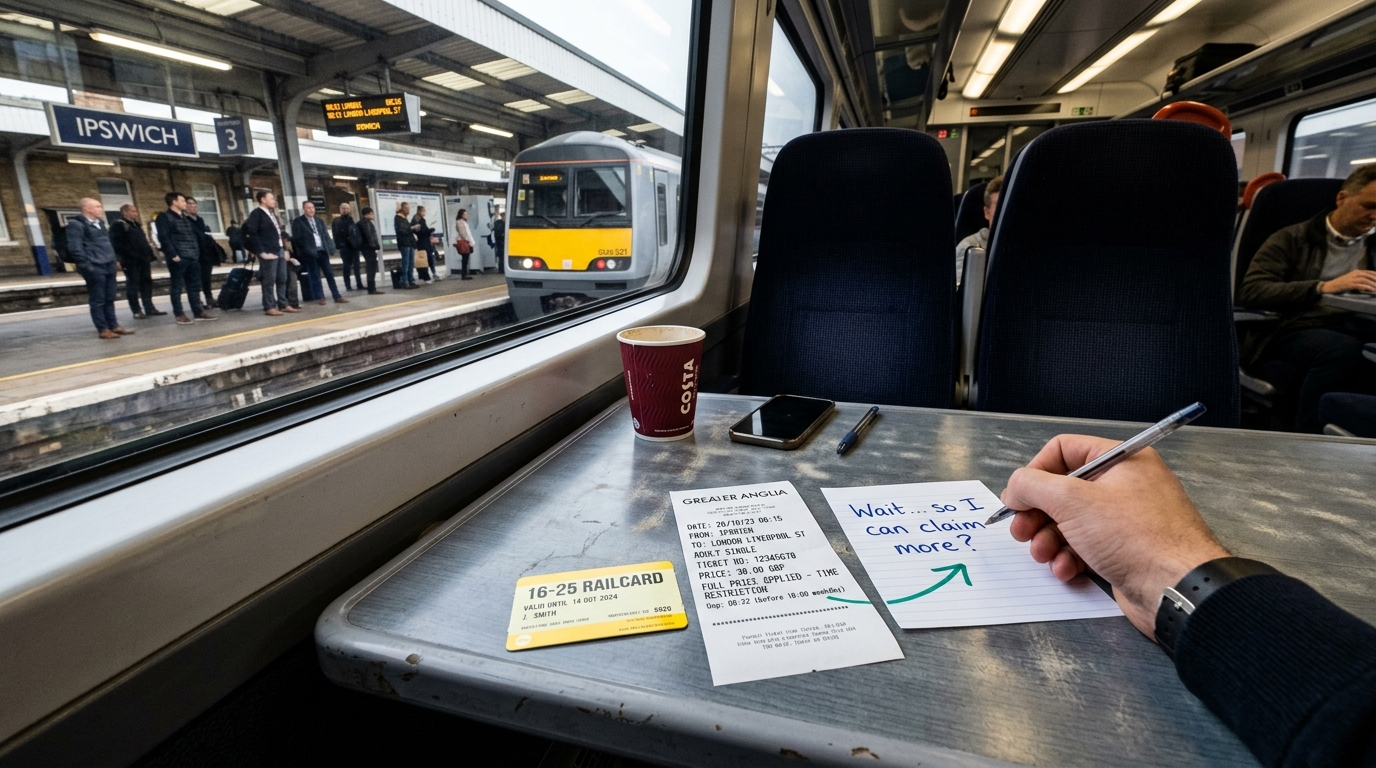
You have a Railcard. You know it gives you one third off. You bought your ticket at Ipswich station at 08:05, got on the 08:22, and arrived at Liverpool Street twenty-three minutes late.
You opened the Delay Repay form. You entered the discounted price.
The compensation figure was lower than you expected.
Here is why — and whether it was actually correct.
The Two Rules Most Railcard Holders Do Not Know
Rule 1: The Time Restriction
Most Railcards — including the 16-25 Railcard, the 26-30 Railcard, and the Two Together Railcard — do not apply before 10:00 on weekday mornings. If you bought a ticket for a service departing before 10:00 on a Monday to Friday, the Railcard discount almost certainly did not apply. You paid the standard adult fare.
This catches a significant number of commuters who buy tickets in advance at the barrier or on their phone for a morning service. They see the Railcard in their wallet, assume the discount is applied, and pocket the receipt without checking.
Rule 2: The Minimum Fare Threshold
In addition to the time restriction, most Railcards have a minimum fare — a floor below which the one third discount cannot reduce the ticket price. The exact threshold varies by Railcard type, but it typically sits in the range of £12 to £15 for standard adult Railcards.
For shorter journeys — say, a single from Manningtree to Ipswich — the full price may already be below this threshold, meaning the Railcard discount applies in name only, or not at all.
Why This Matters for Delay Repay
The compensation calculation is based on what you actually paid. Not what you expected to pay, and not what you would have paid if your Railcard had been accepted.
If you caught the 07:44 from Colchester with a 16-25 Railcard and paid full price (because the time restriction applied), your Delay Repay calculation is based on the full fare — which is actually more favourable than the discounted price. A 30-minute delay on a £38 day return (full price) is worth roughly £19. The same delay on a discounted £25.30 fare is worth around £12.65.
The correct price to use in any Delay Repay claim is the price that appears on your receipt or booking confirmation — regardless of whether you expected a discount to apply.
How to Check What You Actually Paid
- ·Check the receipt from the ticket machine or your mobile booking confirmation
- ·If the Railcard restriction applied (before 10:00 on a weekday), the full price will appear
- ·If the discount was applied, the receipt should show the reduced fare
- ·Use the price on the receipt in your Delay Repay claim
The Twist That Changes the Calculation
Here is the part worth pausing on: if you caught the 07:44 from Ipswich with a 16-25 Railcard and the time restriction applied, you paid the full adult fare — which means your Delay Repay compensation is calculated from the full adult fare.
That is actually more than if the discount had applied.
A £38 full-price day return generates roughly £19 in compensation on a 30-minute delay. The same journey with the discounted £25 fare would generate roughly £12.65. The time restriction — the one that seemed to be working against you — inadvertently gives you a higher compensation entitlement if the train is late.
Worth knowing before you assume the discount was applied.
Season Tickets and Railcards
The minimum fare rule works differently for season tickets. On the Greater Anglia main line, the railcard discount on season tickets is subject to a separate minimum fare calculation that applies to the monthly or annual total. This is set annually and published in the fare schedules.
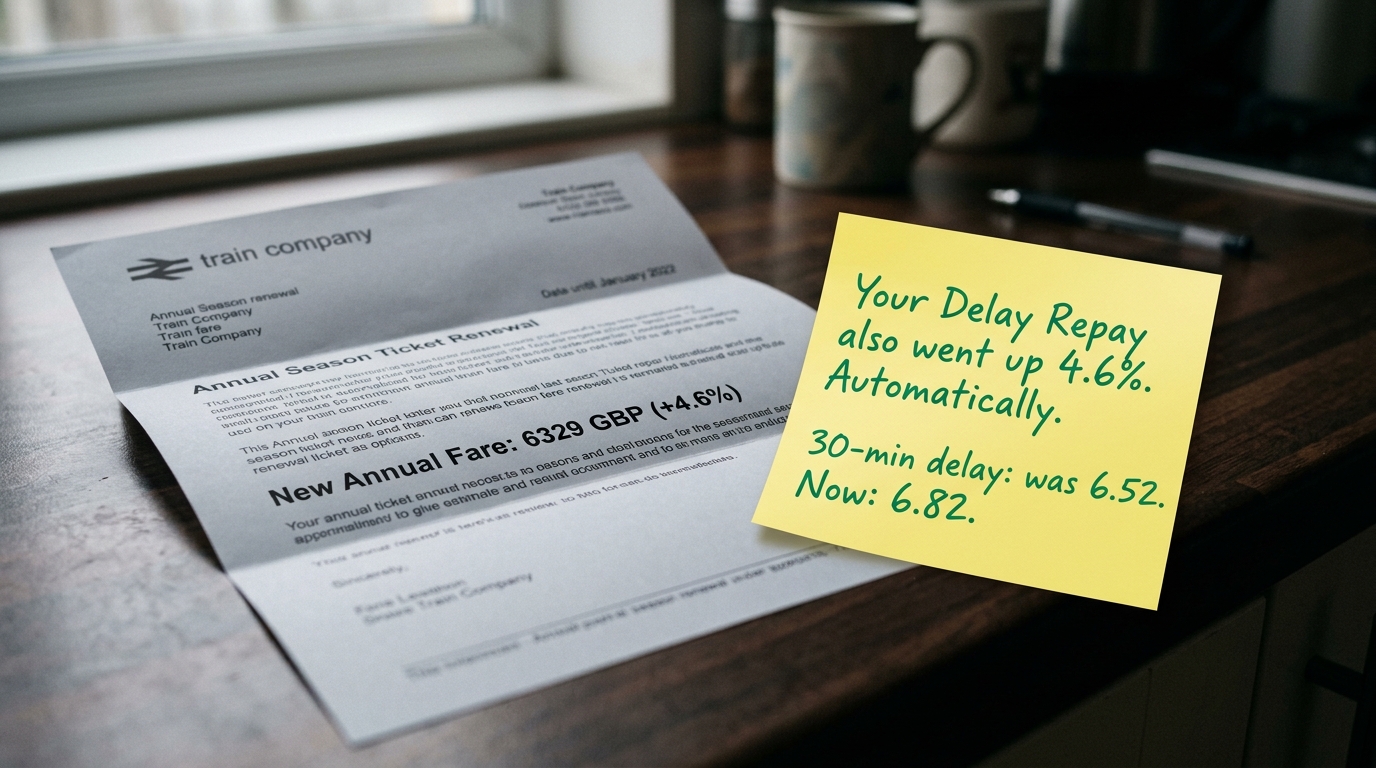
For season ticket holders, the relevant price for Delay Repay purposes is always the total price you paid for the season ticket itself. The 1/464 (annual) or 1/40 (monthly) divisor then applies to that total to determine your single-leg value.
The bottom line: always enter the price you actually paid. Not the price you intended to pay. Not an estimate. The receipt figure.
And once you have filed — bank transfer.
Check what you may be owed — free, no card needed — at railrepay.co.uk.
Sources:
- •National Railcard terms and conditions — railcard.co.uk
- •National Rail Conditions of Travel 2025 — nationalrail.co.uk
- •Greater Anglia Delay Repay — greateranglia.co.uk
Stop leaving money on the platform
Check what your Greater Anglia route may owe you — in 60 seconds
Free delay alerts + AI claim drafts. No card required. You stay the claimant.
You might also like

This article is informational and is not legal advice. See the legal basis and sources. The train company decides the final eligible amount after validating your ticket, journey, and delay evidence. Legal basis and sources