
\"I'll Claim It Later.\" You Won't. Here's Why — and How to Fix It.
ORR research shows 28% of eligible passengers miss their Delay Repay claim because they forgot or ran out of time. That's not a willpower problem — it's a timing problem. Here's the psychology, and the fix.

Rail Repay Podcast
\"I'll Claim It Later.\" You Won't. Here's Why — and How to Fix It.
Enjoy the related dialogue — a two-voice conversation on this topic.
"I'll claim it later."
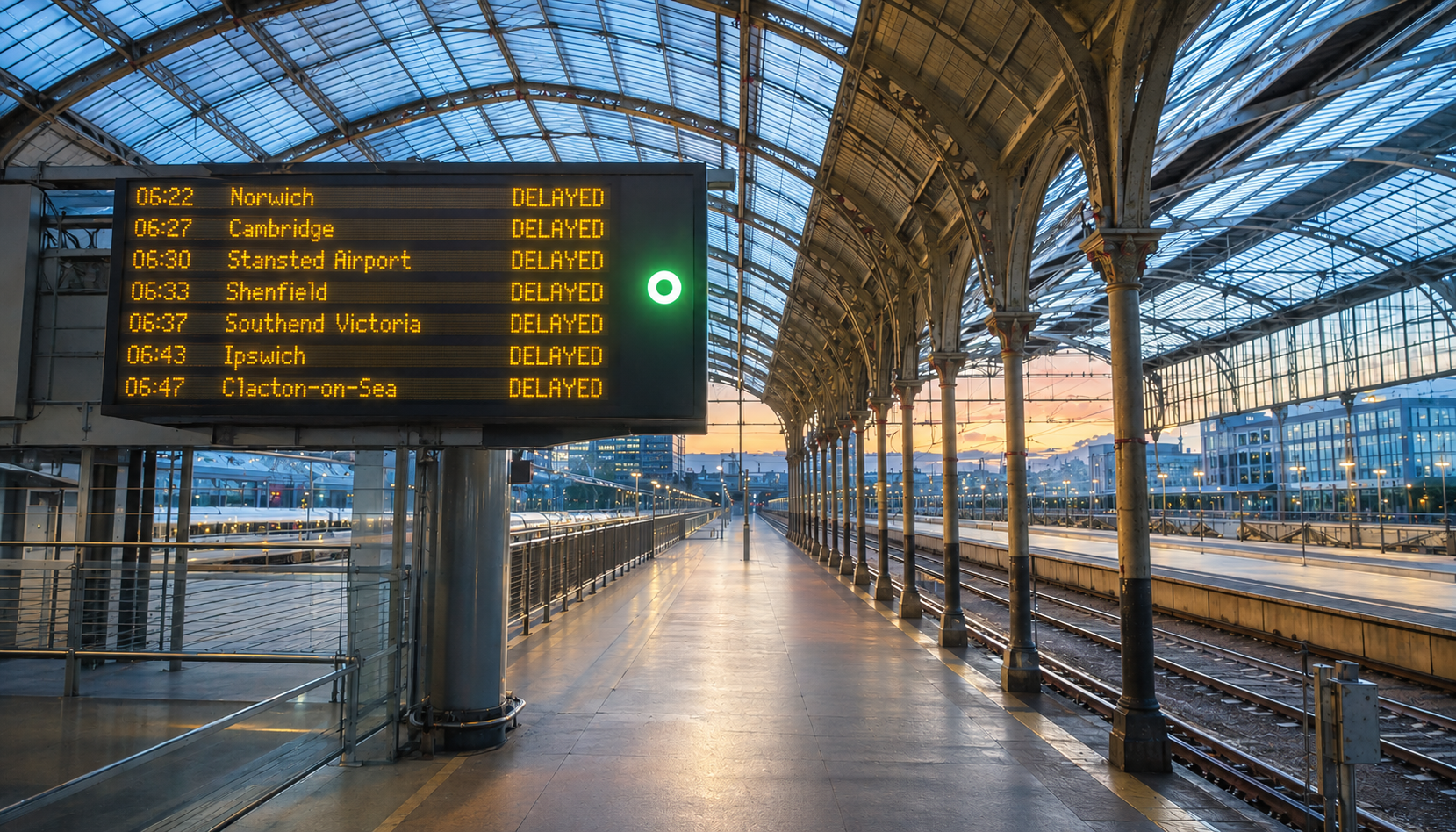
You said it on the platform at Colchester North, watching the 07:44 tick from "On time" to "Delayed." Then to five minutes. Then to seventeen. You found a seat on the next service — someone had left a Metro on it — and made it to your desk just about on time.
You thought about the claim. You didn't file it.
You told yourself you'd do it that evening. Then Thursday. Then the weekend. Then, quietly, the 28-day window closed.
Here's the part that might surprise you: 28% of all eligible rail passengers miss their Delay Repay claim for exactly this reason. Not because the process is impossible. Not because the amount isn't worth it. Simply because they ran out of time.
This is how most Delay Repay compensation disappears.
The Number That Should Bother You
According to ORR (Office of Rail and Road) passenger experience research published in 2024, the single most preventable reason UK rail passengers fail to claim Delay Repay is this:
28% of eligible non-claimants say they forgot or ran out of time.
Not because the process was impossible. Not because they didn't qualify. They qualified, the window was open, and time — and the entirely ordinary tendency to defer uncomfortable admin — did the rest.
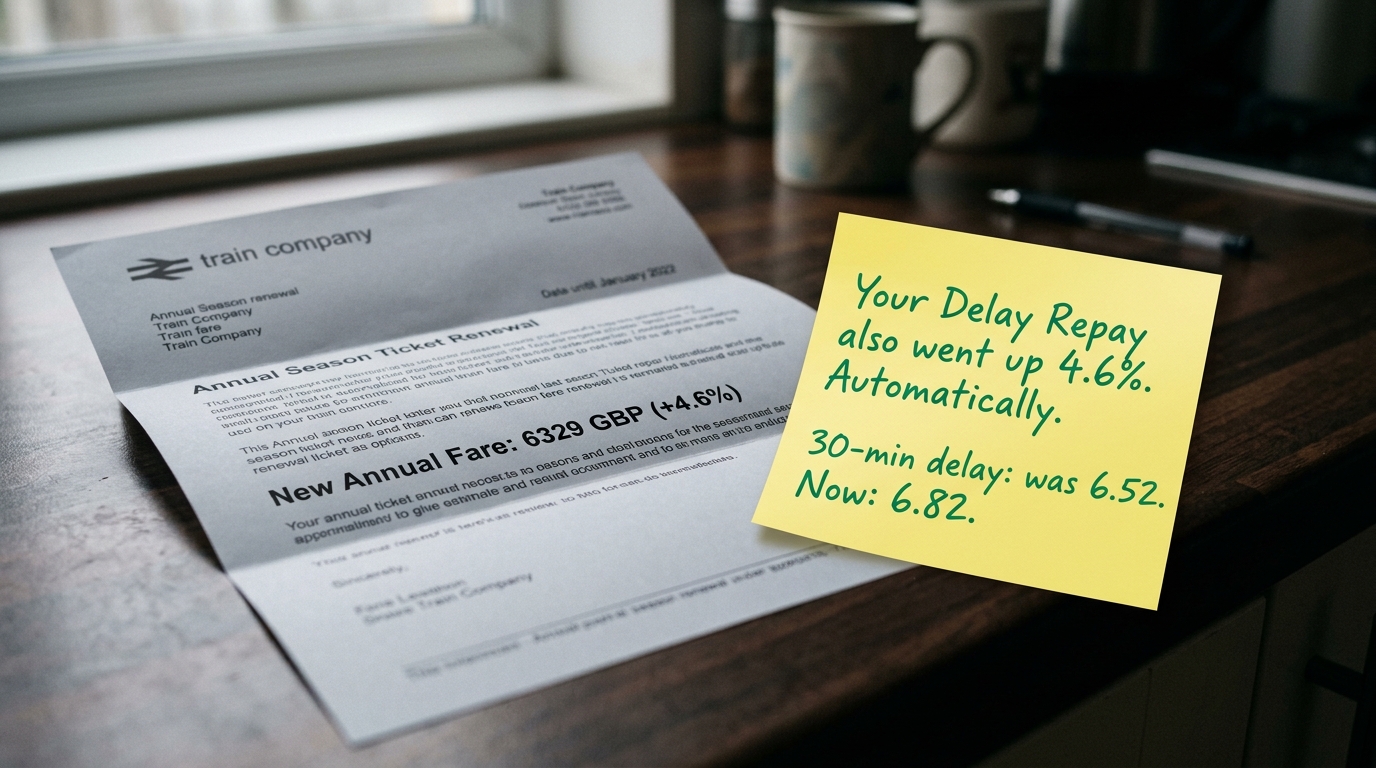
On a Greater Anglia annual season ticket, a 30-minute delay on the Colchester to Liverpool Street run is worth approximately £6.52. Fifteen such delays in a year is roughly £97.50. Most of it never gets claimed.
The train company does not need to make the process difficult. It just needs to outlast your intention to claim.
The Psychology of the Missed Window
There is a concept in behavioural economics called present bias: the human tendency to weight immediate comfort far more heavily than future gain, even when the future gain is objectively larger.
It works like this. On the day of the delay, you are frustrated. The frustration is real and motivating. But frustration also fades. Within 24 to 48 hours of a delay, the emotional urgency to do something about it drops sharply. By day seven, you may barely remember which specific train was late. By day fourteen, the delay has blurred into the general background of your commute. By day twenty-eight, the window is gone.
The 28-day clock does not care about your motivation. It runs at exactly the same speed whether you are thinking about your claim or not.
The Trap Has a Name
Most people who miss Delay Repay claims do not do so out of laziness. They do so because they fall into a specific version of the present-bias trap, one you might recognise:
> "I'll do it properly this weekend."
Weekend arrives. You have other things to do. The claim feels less urgent now. You defer it to the following weekend. Except by then, you have had two more delays and the original one has receded. The motivation to retrieve your ticket confirmation, remember the exact time, and fill in the form has scattered.
This is not a character failing. It is a predictable consequence of asking people to perform admin when their frustration is at its lowest and their competing priorities are at their highest.
One small thing worth knowing: Greater Anglia pays Delay Repay via bank transfer. Always choose bank transfer — it is simpler, faster,. Worth selecting before you forget which tab you even had open.
What Changes When You Get the Alert the Same Day
Rail Repay alerts you to a qualifying delay on the day it happens — often within hours.
The difference is not just convenience. It is timing.
Day one, your frustration is still fresh. You know exactly which train it was. The details are sharp. You open your Rail Repay account, find the AI-drafted claim text ready, and copy it into Greater Anglia's portal in three to five minutes. Done.
Passengers who receive a same-day alert are significantly more likely to complete a claim than those who intend to file manually later. The mechanism is simple: the notification arrives while the motivation to act is still present. There is no gap for procrastination to fill.
The Counter-Intuitive Part
Here is what behavioural economics calls a "commitment device" — and it is probably the most useful thing in this article.
The passengers most likely to claim Delay Repay are not the ones who are most frustrated. They are the ones who receive the alert before the frustration fades. The same-day notification does not just remind you to claim. It creates a moment of action while the motivation is still present, before the gap opens.
This is why the ORR's own consumer research consistently shows that awareness alone does not change claim rates. Knowing you could claim is not the same as claiming. The timing of the prompt matters more than the information itself.
The 28-Day Clock Has Already Started
If you were delayed in the last four weeks and have not yet claimed, the clock is running.
You cannot reclaim the motivation you had on the day it happened. But if you are within 28 days, you can still reclaim the money.
The compensation is not a goodwill gesture from Greater Anglia. It is a formal entitlement under the National Rail Conditions of Travel. The process is not complicated. The barrier, for most people, is simply starting.
For future delays, Rail Repay removes that barrier entirely. The alert arrives the day the delay happens. The draft is ready. The window has barely opened.
Check what you may be owed — free, no card needed — at railrepay.co.uk.
Sources:
- •ORR Passenger Experience Research 2024 — orr.gov.uk
- •National Rail Conditions of Travel 2025, Clause 32 — nationalrail.co.uk
- •Greater Anglia Delay Repay — greateranglia.co.uk
- •Thaler, R. & Sunstein, C. (2008). Nudge. Present bias framework.
Stop leaving money on the platform
Check what your Greater Anglia route may owe you — in 60 seconds
Free delay alerts + AI claim drafts. No card required. You stay the claimant.
You might also like

This article is informational and is not legal advice. See the legal basis and sources. The train company decides the final eligible amount after validating your ticket, journey, and delay evidence. Legal basis and sources