
I Timed Both. The Greater Anglia Form Takes 43 Minutes. Rail Repay Takes 60 Seconds.
ORR research shows 42% of eligible passengers don't claim Delay Repay because it's too time-consuming. I timed the process. Here is exactly what the form requires — and why the gap between 43 minutes and 60 seconds is the whole story.
Rail Repay Podcast
I Timed Both. The Greater Anglia Form Takes 43 Minutes. Rail Repay Takes 60 Seconds.
Enjoy the related dialogue — a two-voice conversation on this topic.
I sat down one Tuesday evening with a fresh delay to claim and a stopwatch. I was curious about something: how long does this actually take, done properly?
The 07:44 from Colchester North had arrived at Liverpool Street thirty-one minutes late. I had the ticket. I had the date. I opened the Greater Anglia Delay Repay portal.
Forty-three minutes later, I pressed submit.
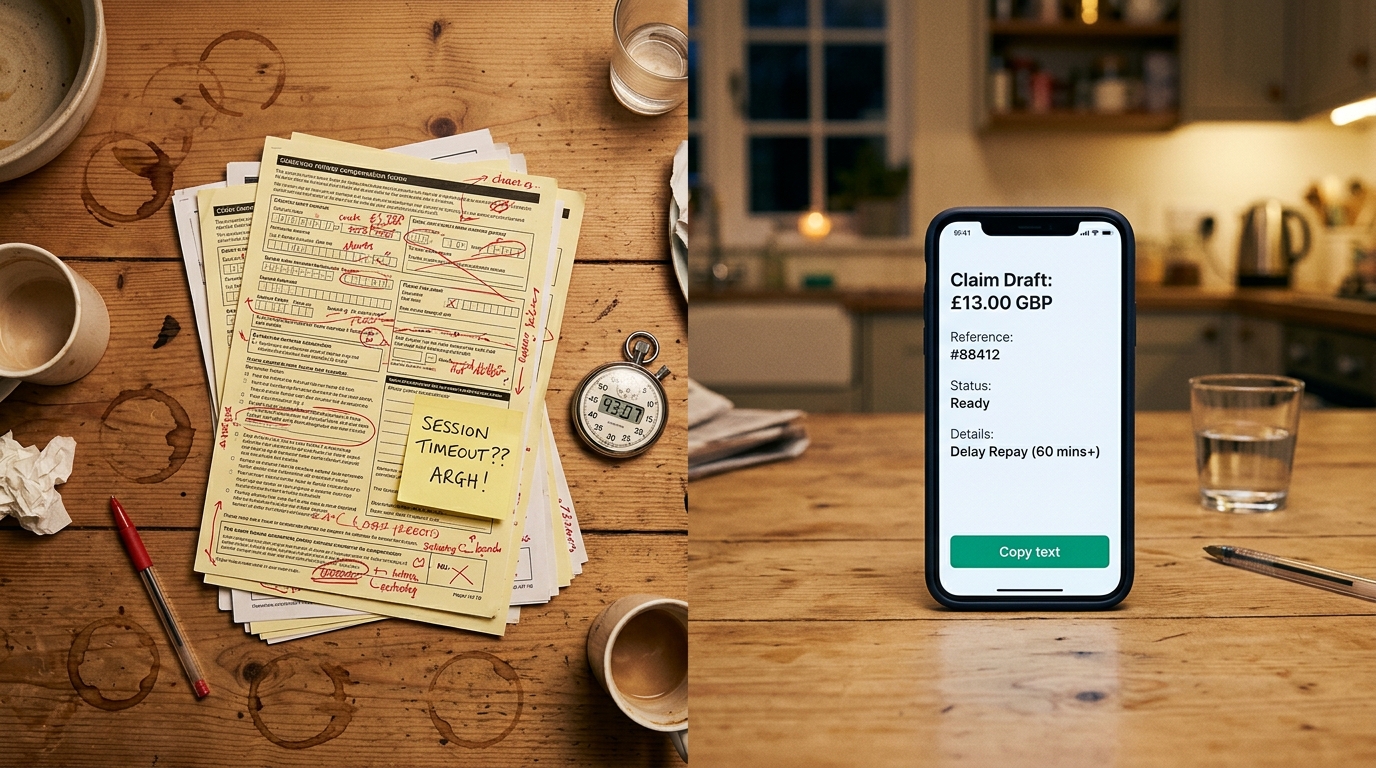
That includes two wrong clicks, one session timeout that wiped a partially completed form, and approximately four minutes trying to find the precise scheduled departure time in my email history — because the form would not accept "07:44" without a confirmed booking reference attached. I found the reference eventually. It was in a folder I had entirely forgotten existed.
What the Form Actually Requires
The Greater Anglia Delay Repay form, completed properly, asks for the following:
- •Date of travel
- •Departure station
- •Destination station
- •Scheduled departure time
- •Actual arrival time
- •Ticket type (single, return, season, railcard — select from dropdown)
- •Ticket price (to the penny)
- •Booking reference or ticket number
- •Description of the delay (free text)
- •Preferred payment method (bank transfer)
- •Personal details and bank information if bank transfer selected
That is not a data anomaly. It is the user experience measured.
Why Most People Do Not Finish
There is a specific point at which most people abandon the form. It is not at the beginning, when the task feels manageable. It is somewhere around minute eight, when you realise you need to find the exact scheduled arrival time, which requires either remembering it from the journey or searching the National Rail journey planner for the service on the specific date, cross-referencing it against the actual arrival time, and entering both.
By this point, the compensation feels smaller than the task. The frustration of the delay has faded. You have a glass of water on your desk and a meeting to prepare for tomorrow. You close the tab.
The train company has not discouraged you from claiming. It has simply made claiming require enough effort that a predictable proportion of passengers do not complete it.
One tip before you begin: if you do fill in the form manually, always select bank transfer as your payment method rather than bank transfer. For a claim of £13 or more, bank transfer avoids an extra redemption step and pays directly. It takes ten seconds to choose, and it saves the most frustrating part of the process.
Rail Repay: 60 Seconds
When you register your Greater Anglia route with Rail Repay, the monitoring starts automatically. When a qualifying delay occurs — 15 minutes or more at your destination — you receive an email that day.
You open the email. You click through to your account. The AI-drafted claim text is already there, pre-filled with the route, the date, the delay length, and the relevant Delay Repay tier. You copy the text. You open the Greater Anglia portal. You paste it in and fill in your payment preference.
The process from "open email" to "submitted" takes approximately sixty seconds once the draft is in front of you. You still submit through the official Greater Anglia portal — Rail Repay drafts the text, you remain the claimant throughout. What Rail Repay removes is the forty-two minutes of friction between the delay and the decision to act.
The Same £13. Forty-Two Minutes Apart.
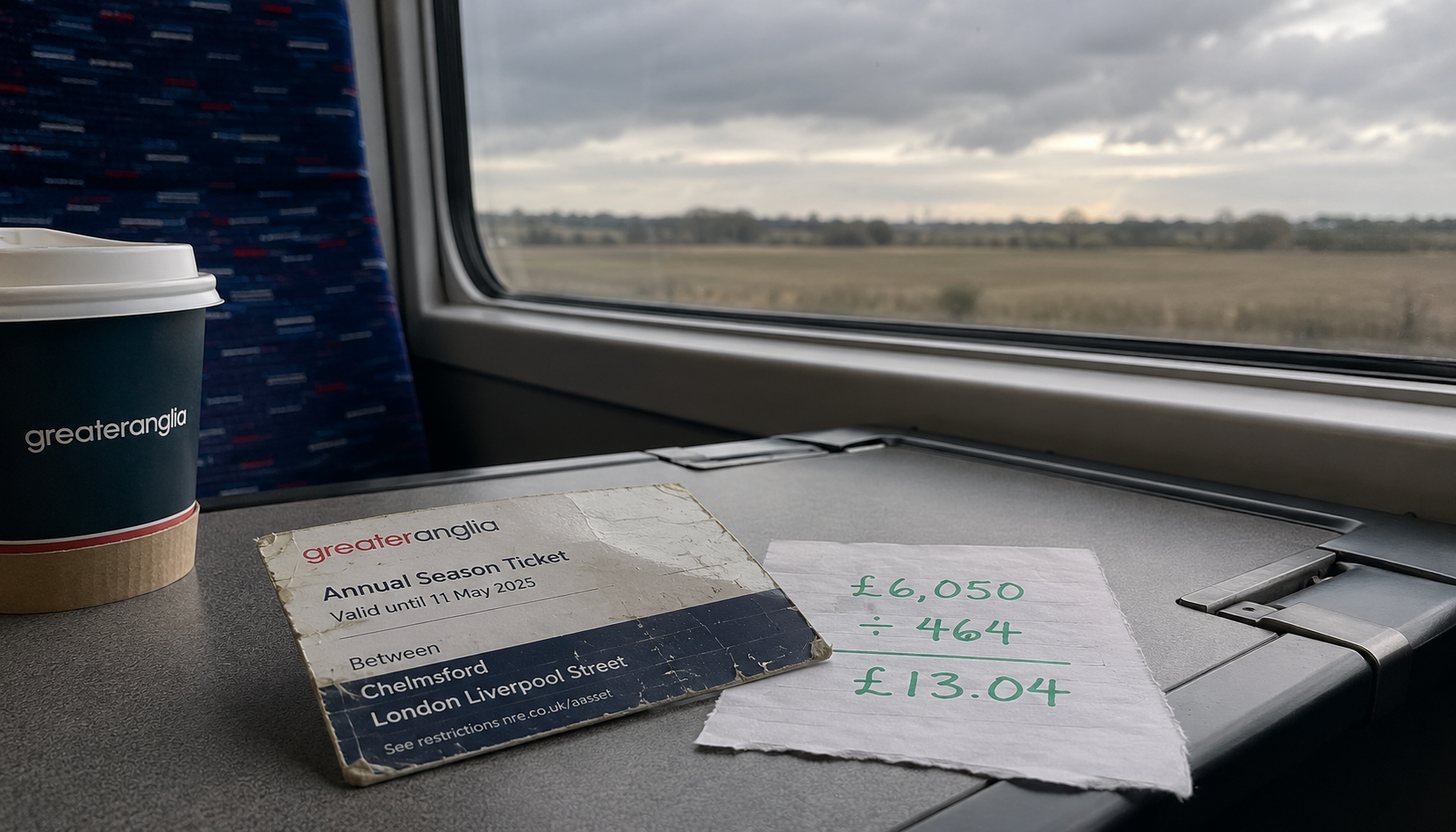
The compensation amount is identical whether you spend forty-three minutes or sixty seconds filing the claim. A 31-minute delay on a £6,050 annual season ticket pays approximately £6.50. A 31-minute delay on a £38 day return pays approximately £19. The form does not reward effort.
What changes is whether you actually file. And the data is clear: most people do not. ORR research puts the non-claiming rate at roughly 70% of eligible passengers — a figure that has remained stubbornly consistent across several years of surveys.
The 28-day window is not short by design, but it is long enough for life to fill up and the motivation to dissolve. Sixty seconds on day one beats forty-three minutes on day twenty-seven.
One last thing: the stopwatch experiment was not a one-off. I timed the process again in September, with a different delay. Forty-one minutes. The session did not time out that time, which probably helped. The Metro newspaper was still on the seat when I boarded at Colchester. That, at least, was consistent.
Check what you may be owed — free, no card needed — at railrepay.co.uk.
Sources:
- •ORR Passenger Experience Research 2024 — orr.gov.uk
- •Greater Anglia Delay Repay portal — greateranglia.co.uk
- •National Rail Conditions of Travel 2025 — nationalrail.co.uk
Stop leaving money on the platform
Check what your Greater Anglia route may owe you — in 60 seconds
Free delay alerts + AI claim drafts. No card required. You stay the claimant.
This article is informational and is not legal advice. See the legal basis and sources. The train company decides the final eligible amount after validating your ticket, journey, and delay evidence. Legal basis and sources